
Are koi carp really Japanese aristocrats who somehow ended up lording it over British garden ponds?
Koi carp didn’t so much “arrive” in Britain as sweep in with a velvet cloak and a fan club. Today, they glide through UK ponds from Basingstoke to Berwick like living jewels—but their journey began in the snowbound hills of Niigata, Japan, where humble food carp mutated into ornamental marvels over 200 years ago. In this brisk (and occasionally cheeky) tour, we’ll chart how koi evolved from farm-stock to status symbol, how Britain fell in love with them in the 20th century, why clubs and shows cemented the hobby, and how biosecurity rules now keep your fish safe. We’ll also look at the design innovations that made mass importing possible and the cultural moment when koi stopped being “nice fish” and became “must-have treasures”.
If you’re a newcomer eyeing that empty patch of lawn and thinking “future koi palace,” this is your primer. If you’re already knee-deep in filter media, this is a nod to the history that made your obsession possible. Either way, prepare to meet the aristocracy of the pond.
From rice terraces to living art: the Japanese origin story
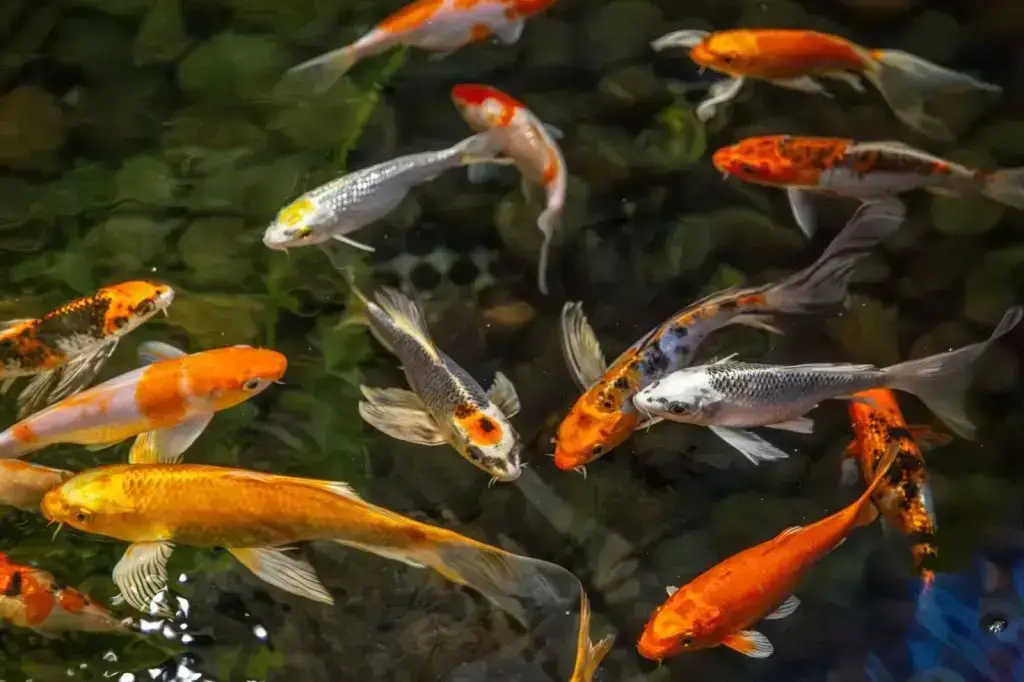
The ornamental koi we adore—properly called Nishikigoi (brocaded carp)—trace back to the late Edo period in the mountainous Niigata Prefecture of Japan, especially the villages around Ojiya and Yamakoshi. Farmers who kept black food carp (magoi) noticed colour mutations and, with time (and a lot of selective breeding), refined stable varieties like Kohaku, Sanke, and Showa. The systematic breeding of ornamental carp is documented from the 1820s in this region, and the very term “Nishikigoi” gained currency in the early 20th century, as the fish shifted from happenstance curiosities to deliberate, prized lines.
A helpful twist in koi genealogy: Japan’s early-1900s cross with German “Doitsu” carp (mirror/leather carp) produced scaleless or partly scaled koi lines (the elegant ones with the “zipper” of scales), a reminder that koi breeding has always been adventurous rather than purist.
Carp in Britain: medieval roots, modern romance
Carp themselves are hardly new to these isles. Evidence suggests carp were present in Britain by the late 14th or early 15th century, reared in monastic and estate ponds for the table. That’s centuries before ornamental koi swaggered onto the scene. But the UK’s love affair with koi—the colourful, Japanese-bred varieties—grew dramatically in the 1960s and 1970s, precisely when hobby infrastructure, improved transport, and glossy magazine culture made keeping exotic fish doable for ordinary Britons (or at least the determined ones).
A surprisingly practical hero of this story? The humble plastic bag—paired with oxygenated water and insulated boxes—which revolutionised live fish transport. Suddenly, shipping koi safely from Japan to Heathrow and beyond was feasible at scale, catalysing nationwide availability and the birth of a full-blown British koi scene.
Clubs, shows, and the British koi identity
Every hobby matures when it gets organised. In Britain, the watershed moment was the creation of the British Koi Keepers’ Society (BKKS) in 1970, which gave enthusiasts a national network, standards, education, and—importantly—shows. The BKKS National Koi Show became the annual stage where koi bloodlines, pond craft, and competitive spirit met. The list of Grand Champions since 1976 reads like a condensed history of British taste, with the “Gosanke” (Kohaku, Sanke, Showa) often dominating.
Why do shows matter? Because koi are art in motion. Judging criteria (pattern balance, body conformation, skin lustre) shaped what British keepers bought and bred. Shows created aspiration, which created investment, which created better ponds, better filtration, and, yes, better fish. The result: the UK became one of the world’s most enthusiastic koi markets outside Japan.
From hobby to household name: 1980s–2000s
By the late 20th century, koi were more than a niche pursuit. Garden centres flirted with respectable koi offerings, specialist dealers proliferated, and British magazines and forums kept the knowledge flowing. Meanwhile, Japanese breeders (from Niigata and beyond) were refining lines, exporting top-tier fish, and visiting UK shows. Alongside the classics, Doitsu variants and “long-fin” styles captured imaginations. In Britain, the “typical” koi pond evolved: deeper, more stable systems with bottom drains, multi-bay or pressurised filtration, and the all-important UV clarifier—because nobody romanticises pea soup.
A sobering chapter: KHV and the rise of biosecurity
Every good hobby has a grown-up phase. For koi keeping, it’s biosecurity. Koi herpesvirus (KHV)—a highly contagious disease affecting all common carp varieties, including koi—forced the UK hobby to professionalise its hygiene. The UK has maintained statutory controls for KHV since 2007; it’s listed under The Aquatic Animal Health (England and Wales) Regulations 2009, with DEFRA/CEFAS actively monitoring outbreaks and publishing guidance. As recently as 2025, the government reported KHV disease outbreaks and reiterated surveillance and control measures. For keepers, this translated into quarantining new fish, buying from reputable sources, and taking water quality and stress reduction seriously.
The upside? Strong regulation and best practice have made the UK one of the safer places to keep koi, provided you follow the rules: isolate new arrivals, never mix stock from unknown sources, and treat transport and temperature swings with respect.
Culture meets craft: why koi “fit” Britain
Why did koi thrive here? Three very British reasons:
- Gardens as theatres. The UK’s gardening culture loves focal points—roses, topiary, sculpture. Koi are kinetic sculpture. They give a garden sound, movement, and a bit of theatre.
- Breeding and judging appeal. We adore a show ring (see: Chelsea Flower Show, Crufts). Koi give the same fix: standards, classes, rivalry, and the tantalising possibility that your fish might one day wear the crown.
- Tinkerers’ paradise. British hobbyists enjoy kit. Filters, pre-filters, bottom drains, drum filters, airlifts—koi ponds are an acceptable form of adult Meccano.
From Japan to your pond: the modern journey of a UK koi
Today’s path from Niigata to Nottingham is a dance of logistics, paperwork, and patience. Reputable importers work with breeders, schedule shipments during favourable temperatures, and manage transit times to reduce stress. On arrival, quarantine is non-negotiable: several weeks of observation, health checks, and occasionally prophylactic treatments. Only then does a koi earn the right to tempt you from a dealer’s vat.
When you bring fish home, copy that discipline. A separate quarantine system (even a modest one) is the cheapest insurance policy you’ll ever buy. Test water parameters, keep temperatures stable, and introduce fish to the main pond gradually. Your future self—who isn’t dealing with a preventable outbreak—will thank you.
The British pond, perfected
Let’s be frank: many “koi ponds” are really koi puddles with ideas above their station. A proper UK koi pond, built with longevity in mind, typically features:
- Depth of 1.2–2 m for thermal stability.
- Bottom drains feeding mechanical filtration (sieves/drums) then biological stages (moving bed, shower, or well-sized static media).
- Good turnover (once per hour is a sensible target) and aeration.
- UV-C clarifier sized to your true volume, not your optimistic one.
- Winter strategy: covers and/or a modest heat source to avoid brutal temperature swings.
- Quarantine—yes, again.
This is where the Japanese lineage meets British engineering: the fish are art, the pond is infrastructure. Get the latter right and the former shines.